 UA
 EN
Why a quality tattoo cannot be cheap: an investment in art, health and trust
In the modern world, tattooing has long ceased to be a marginal phenomenon, having turned into a powerful form of art, self-expression and personal story. And, like any art, it has its own value. Often, people looking for a tattoo option try to find the cheapest one, perceiving the artist's work merely as a "drawing on skin." However, a low price almost always hides even greater costs — financial, emotional and even physical. Let's take a detailed look at why a quality tattoo simply cannot be cheap.
Safety and health: uncompromising value
The first and most important thing is your health. Cheap work often means cutting corners on what matters most.
Sterilization and disposable materials. A serious artist works in sterile conditions: using disposable needles, cartridges, gloves, pigments in single-use tubes, covers for furniture and equipment. An autoclave for sterilizing metal components (such as grips) costs a lot of money and requires regular maintenance. Cheap salons often neglect this, washing instruments with ordinary disinfectants, which leads to the risk of infection with hepatitis, HIV, staphylococcus and other dangerous infections.
Quality of pigments. Cheap Chinese inks may contain heavy metals, toxic compounds and dangerous impurities. This not only causes allergic reactions (sometimes years later), but also leads to rapid fading, color shifts (for example, black may turn blue or green) and complicates further correction. Professional pigments from trusted global brands (Eternal, Dynamic, Fusion, etc.) have quality certificates, are safe for health and deliver vibrant, stable color for decades.
Equipment and tools
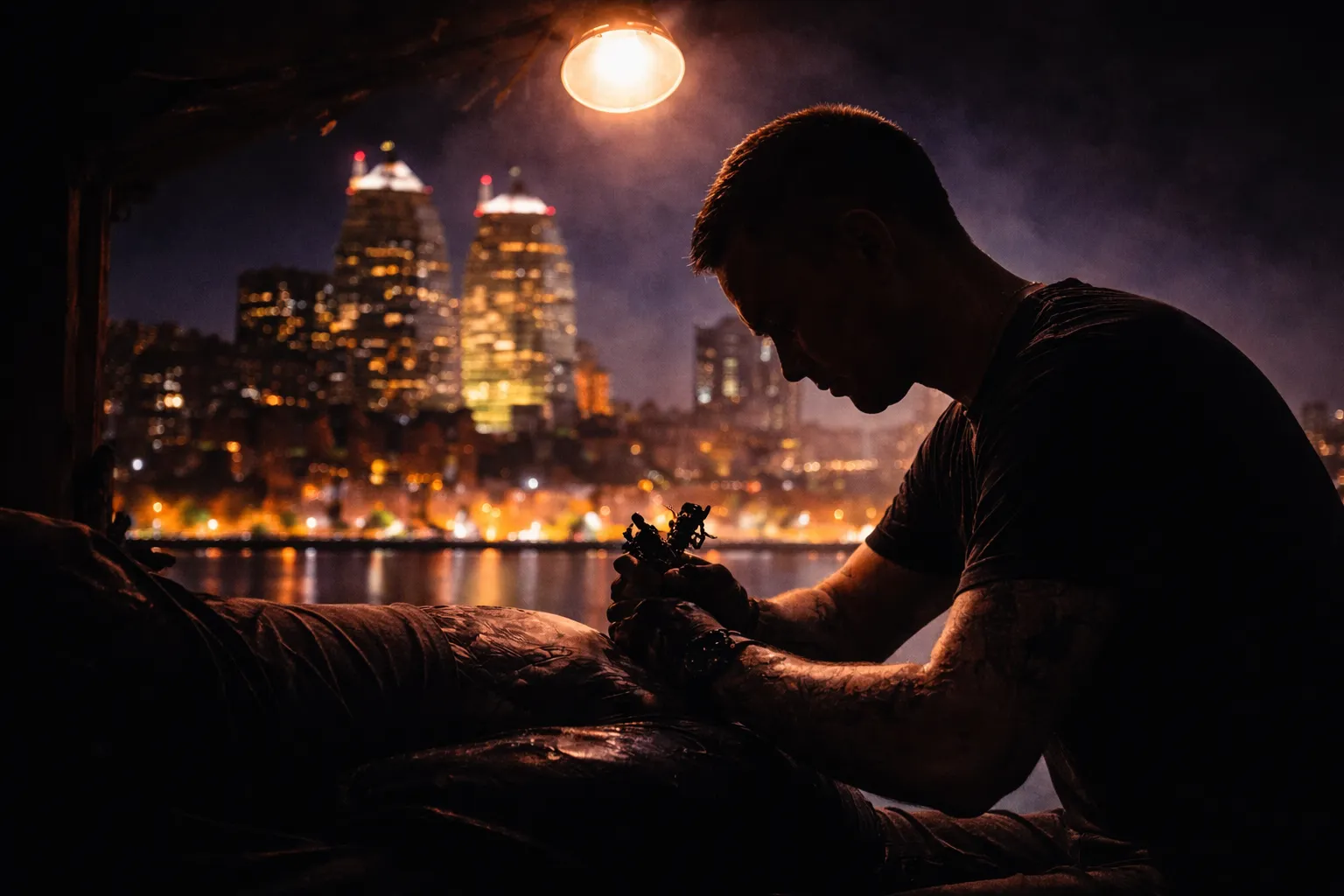
Quality working tools are an expensive investment for the artist himself.
Tattoo machines. Professional high-quality rotary or coil machines (for example, from Bishop, FK Irons, Ambition) cost hundreds, and sometimes thousands of dollars. They ensure a perfect needle trajectory, minimal skin trauma, quiet operation and comfort for the client. Cheap copies hit unevenly, tear the skin and make the process painful, while the result is low quality.
Additional equipment. This includes quality lighting (so the artist can see every detail), a comfortable chair for the client, an ergonomic chair for the artist with back support (so their hand does not get tired or tremble), and a UPS for stable operation of the machine during power outages.
Experience, skills and time: invaluable capital
The training of a professional tattoo artist never ends.
Years of learning. The path from apprentice to professional takes years. It includes countless hours of practice on skin (often on silicone trainers or on oneself), studying anatomy, the basics of composition, color theory, techniques and styles. The artist constantly improves: attends conventions, takes part in master classes, buys educational materials.
Preliminary work. Creating a sketch is a separate creative process that can take from several hours to several days. The artist does not just "draw a picture," but develops a unique design that perfectly fits the anatomy of your specific body part, takes into account skin stretching and the future aging of the tattoo.
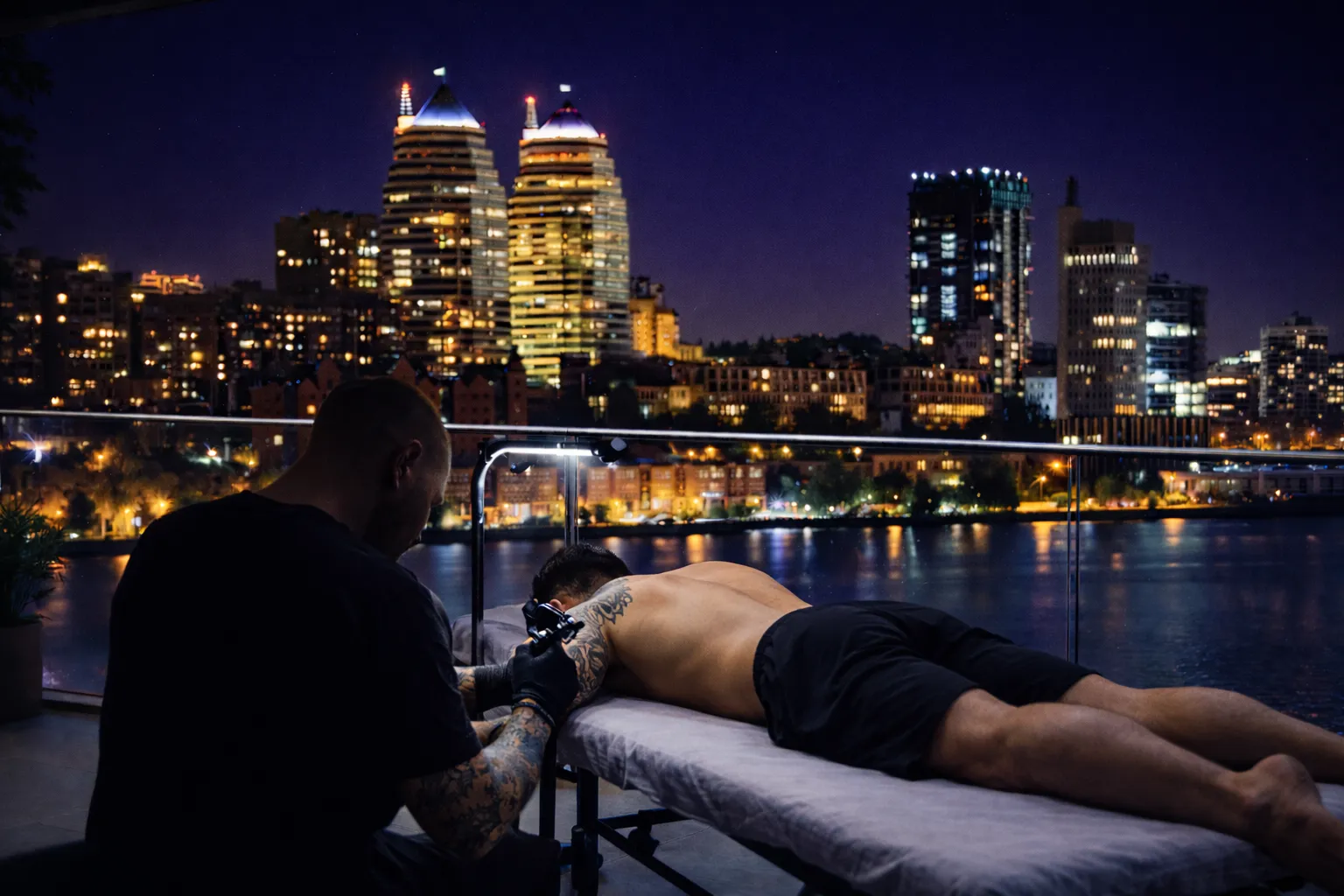
Time of direct work. A tattoo session lasts for hours, sometimes days. It is tremendous concentration, strain on vision, arm and back muscles. The artist invests their knowledge, experience and energy into every movement. This is not conveyor production, but handmade, jewelry-level work.
The artistic component: uniqueness and original style
You are not paying for time, but for uniqueness and exclusivity.
Original style. A renowned artist has their own recognizable signature. You go to them precisely for that. It could be realism, geometry, ornamental or any other style refined over the years. You receive not just a tattoo, but an original work of art created specifically for you.
Quality guarantee. A professional guarantees their work. They will not disappear after the session, but will advise on proper care and provide a free touch-up after healing if necessary. They are interested in you being satisfied for life, because your recommendation is their reputation.
Long-term perspective: cheap today — expensive tomorrow
A cheap tattoo will very quickly begin to fade, blur and lose its shape. Fixing and covering up a failed piece at a good artist will cost many times more than if you had immediately gotten quality work. In addition, the laser removal procedure is an even longer, more painful and more expensive process.
Conclusion: your body is not a canvas for experiments
Choosing an artist is a choice for life. A tattoo will stay with you forever, so this is not an area where you can save. It is an investment in your confidence, your image and your health.
That is precisely why, if you are considering getting a tattoo in Dnipro, it is important to turn to a true professional, an artist with vast experience and an impeccable reputation. Such a specialist is Dmytro Yavtushenko. An artist who uses only the best materials, works with the most modern equipment in sterile conditions and puts a piece of his talent and experience into every work. By turning to him, you receive not just a tattoo, but an original work of art on your skin that you will be proud of for life. Trust the best, because your body deserves it.